

It can be easy to mix up June 21 and September 30, but they aren’t interchangeable. Both are important Indigenous observances that go beyond a day off, and each comes with its own purpose and meaning. Here is a simple guide to what each day is for – and how CUPE members can show up in a good way and carry that commitment into the rest of the year.

June 21: A celebration
June 21, National Indigenous Peoples Day, is a day of celebration – a time to celebrate the vibrant traditions and cultures of First Nations, Inuit and Métis peoples, and their outstanding contributions to our communities.
It is also a moment to recognize the ongoing, fierce advocacy of Indigenous CUPE members and Indigenous communities across Canada. It is a reminder of our responsibility to respect the rights of Indigenous peoples on ceded and unceded territories, and to protect their cultures and languages.
CUPE’s national diversity vice-president representing Indigenous workers, Debra Merrier, says June 21 is also deeply personal. It is a time to spend with family and community, to connect with Elders, and to celebrate traditions by getting “deep into our spirituality and our culture.” “There are many different events that take place from coast to coast to coast on June 21. It’s also the longest day of the year – it’s a time for us to connect and it brings a sense of renewal and ‘new beginnings,’” she says, explaining the significance many people attach to the solstice.
One important truth that often gets lost: there isn’t one single Indigenous culture, and there isn’t one single way to celebrate. First Nations, Inuit and Métis peoples include many distinct nations and communities across the country, with different languages, teachings, histories, and ways of gathering. That diversity matters, and it means celebration can look different depending on the region, the people gathering, and the relationships.
There are many ways to recognize Indigenous peoples in CUPE events, conferences and conventions, but National Indigenous Peoples Day isn’t a day when Indigenous members should be expected to organize cultural programming or performances.
“I always say June 21 is a time for us,” Merrier points out. “It’s not a time for us, as Indigenous peoples, to organize big events and invite people, because it’s our time. It’s a time to be with our families, to spend time on the land. Sometimes we hold ceremonies, sometimes we feast. Our events are more relationship-based, they’re about the people around us. That’s what June 21 is about.”
Across the country, Indigenous communities hold many different ceremonies and gatherings that mark different parts of the year, not just June 21. Some gatherings, like powwows, are more widely known, but there are many others too. Traditions can look different from region to region as people reconnect with culture and carry teachings with them as they move.
How to mark the day in a meaningful way
- Learn about the Indigenous nations on whose territory you live and work.
- Join public events you’re invited to and be a good guest: listen, learn, and share.
- Support Indigenous-led initiatives and the organizers, educators, and creators behind them.
- Don’t ask Indigenous colleagues or community members to create content or plan events for your workplace.
- Read the Truth and Reconciliation Commission Final Report and consider how you can support the 94 Calls to Action.
- Use CUPE’s Truth and Reconciliation bargaining guide to bargain language supporting Indigenous workers into collective agreements.
- Acknowledge Indigenous territory at meetings with intention, not as a scripted formality.
- Reach out and build relationships with local Indigenous communities and organizations and amplify Indigenous voices.
- Keep pressure on the federal government to implement their action plan to address the findings of the Final Report of the National Inquiry into Missing and Murdered Indigenous Women and Girls, the Truth and Reconciliation Commission’s 94 Calls to Action and the United Nations Declaration on the Rights of Indigenous Peoples Act.

September 30: A memorial day
September 30 is the National Day for Truth and Reconciliation. It is not a celebration day. It is a day for remembrance, truth, and responsibility. Inspired by the story of residential school survivor Phyllis (Jack) Webstad from the Stswecem’c Xgat’tem First Nation, communities across Canada have commemorated September 30 as Orange Shirt Day since 2013 – a day to learn and reflect on the truth about residential schools and turn that learning into action.
As a six-year-old girl, Phyllis was given a new orange shirt by her grandmother before being taken to a B.C. residential school. The shirt was confiscated and destroyed on the first day of class, and that act has come to symbolize the colonial goal of residential schools: forced assimilation of Indigenous peoples.
Debra Merrier stresses that symbols like wearing an orange shirt on that day matter most when they lead us back to the truth. “People need to know what the truth is. A big part of Orange Shirt Day is the residential schools. It’s a memorial day to honour the children who never returned home, honour the survivors of the residential schools, and honour their families and community who are still hurting today,” she says. “It’s not a time to celebrate, it’s a time to reflect, to educate, and to acknowledge what we have lost: thousands of years of history.”
While records and recognition aren’t always complete, and some sites and experiences haven’t been consistently documented or acknowledged, the truth is that residential schools operated for more than a century in Canada. The first church-run school opened in 1831 in Ontario, and the last federally run school closed in 1996 in Saskatchewan. Merrier adds that 139 residential schools are formally recognized under the IRSSA and were operated by the government and churches, while also stressing that not all schools “on the land” were fully documented or acknowledged.
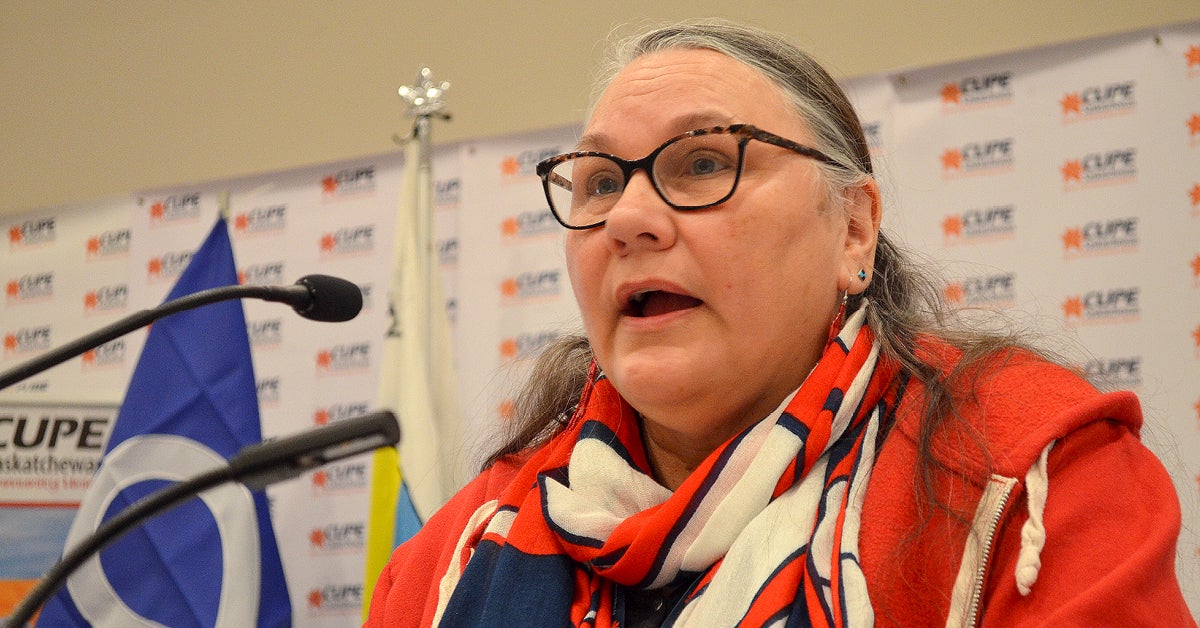
More than 150,000 First Nations, Inuit and Métis children attended residential schools, and the full truth is still being uncovered. At the 2025 CUPE National Convention, delegates adopted a resolution committing to fight anti-Indigenous racism and the denial of residential schools. “The public, the people, the community, have to remember residential schools have impacted so many,” Merrier says, noting how personal this day is for many families, including her own. “I’m the daughter of a residential school survivor. My mom was in a residential school for 14 years – she wasn’t able to come home during that time.”
Merrier remembers the scale of the system and the cruelty behind it: schools with hundreds of children, strict separation between boys and girls, and an education designed to erase language, culture and identity.
September 30 shouldn’t be treated like a generic awareness day. Truth and reconciliation can’t be rushed and reduced to a script, or stop at symbolism. It is also connected to our fight against ongoing systemic injustices and environmental racism. It calls on us to act differently because of what we now understand – what Merrier calls “reconcili-action”: moving from learning to changes we can implement in our workplaces, locals and communities.


