
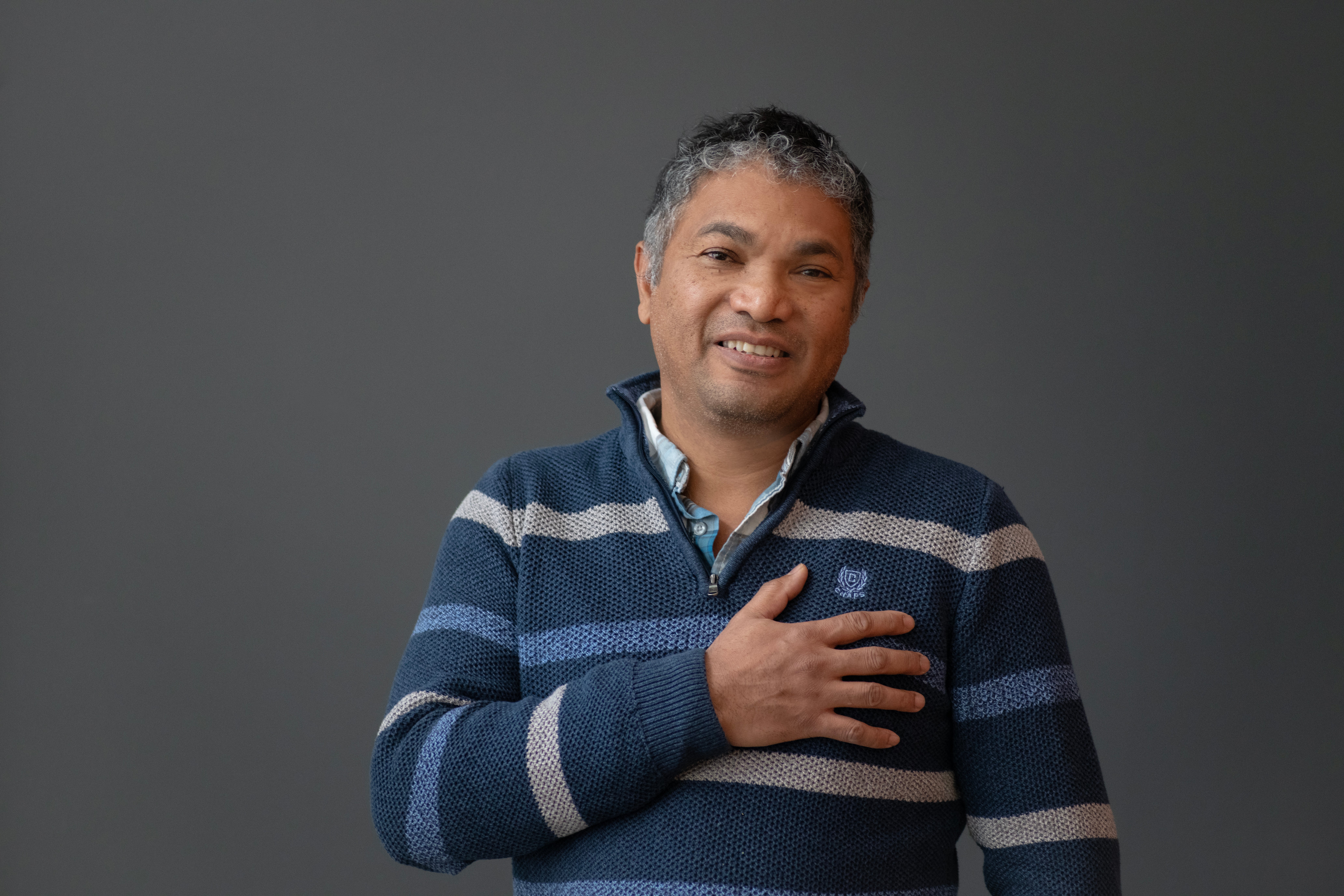
As part of our union’s commitment to learn from the experiences and celebrate the successes of Indigenous, Black and racialized CUPE members, CUPE is profiling members of the National Indigenous Council and National Racial Justice Committee. This month, meet National Racial Justice Committee member Eric Ravelojaona.
With a passion for defending workers’ rights, Eric Ravelojaona arrived in Canada 23 years ago. Originally from Madagascar, he first worked in the hospitality sector under a closed work permit, where he endured thankless and demanding working conditions. At the time, like many newcomers, he did not know his rights and was not unionized, a situation where he felt he needed to accept everything his employer demanded and avoid asking questions.
In 2011, Eric obtained his Canadian citizenship and studied at the Collège communautaire du Nouveau-Brunswick. Today he works at the college as a purchaser/ chief storekeeper. In 2023 he became president of CUPE 5026, and he is a member of the CUPE New Brunswick executive board. He has also been a member of the National Racial Justice Committee since October 2024.
Fighting for better working conditions
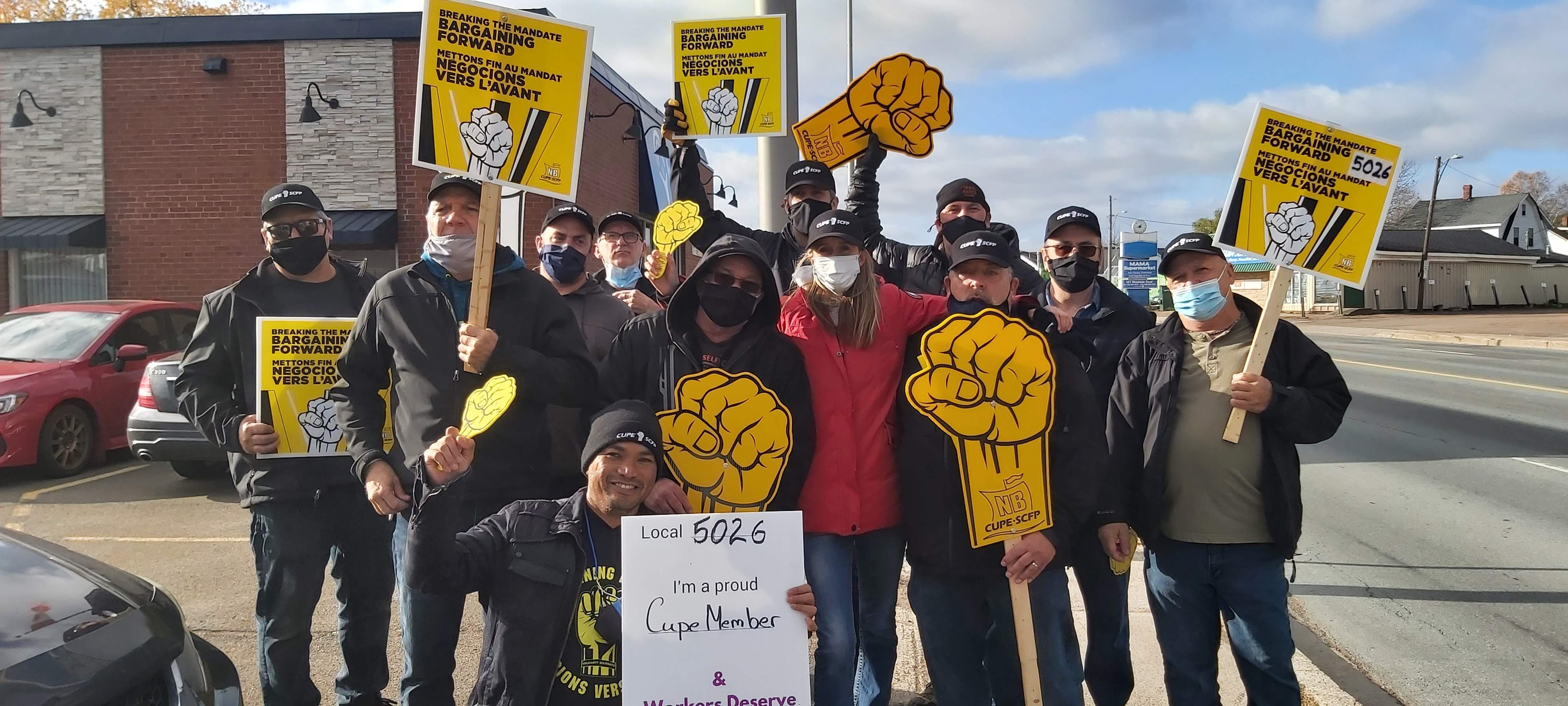
The 2021 strike in which CUPE 5026 members participated had a big impact on Eric’s journey as an activist. As recording secretary of his local at the time, he saw a growing solidarity between his colleagues as they fought for better wages and working conditions. The strike brought a special sense of unity in the group and brought together both day shift and evening shift picketers. The strike helped the workers make important gains on many issues that were important to the local, and it was a source of great pride for members knowing they stood up for themselves.
Now as president of his local, Eric is part of the bargaining committee and plans to assert the rights of his members, especially those of seasonal and temporary workers.
Education and knowledge are at the heart of member engagement
Eric takes pride in being a CUPE member and contributing to improving working conditions for his friends and colleagues.
The different positions he holds in the organization helped him develop precious skills to respond to members’ needs and convey their concerns. For him, it is essential that every member be able to understand their collective agreement as well as the constitution and bylaws of the union. He is also a strong believer in knowledge sharing: new generations of workers must be able to lean on the experience gained by activists over the years, while bringing their own contribution to the union.
“For more than 60 years, generations of workers helped our union thrive. This work cannot be left behind: the union must continue to grow, adapt and evolve with the times,” he says.
That is how Eric fuels his passion for both union activism and education: “What motivates me as an activist in CUPE is all the union education resources we have access to, that support me and my colleagues.”
He believes it is crucial to give people the tools they need and allow them to learn and grow. He illustrates this point by describing a recent activity he did with his son: a cooking class. Eric explains that between professional obligations and family demands, parents don’t always have the opportunity to spend quality time with their children. But thanks to this cooking class with his son, he realized he could share experience with him in a simple but meaningful way.
He compares this experience with the functioning of a union local: by spending quality time with members, elected officers and activists can share their knowledge and experience, while strengthening the members’ sense of belonging. For him, it’s important to ‘respect the proportion of ingredients’, to find the right balance between patience and enthusiasm and turn curiosity into a real passion.
Activism for newcomers is essential
Newly arrived immigrants, foreign workers and/or temporary workers are key concerns for Eric. He is convinced that governments must absolutely invest in improving their working conditions. In fact, when these workers feel welcomed and safe, the entire society benefits.
Ericsays he is still impressed by CUPE and its structure: “In some countries, joining a union is seen as a bad and poorly organized thing. Here, it is very well structured, and we need to take advantage of the opportunity we have to engage in activism.”
He would like to encourage racialized members to seek out and meet activists in their union and to learn about their own rights. For him, union involvement and activism for racialized workers, newcomers or temporary workers, is a great source of strength for the entire labour movement.
Eric recalls, for instance, a recent provincial tour when a racialized member, of Muslim faith and living with a disability, was called into a meeting with human resources without being aware of his rights as a worker, including his right to be accompanied by a union representative. For Eric, this situation illustrates the importance of empowering members with education and fully taking on the role of an elected officer to support members and represent them effectively.
Eric ends by extending an invitation to members: “Don’t stay alone. Reach out to your union representative. Ask questions. We are here to help you.”