
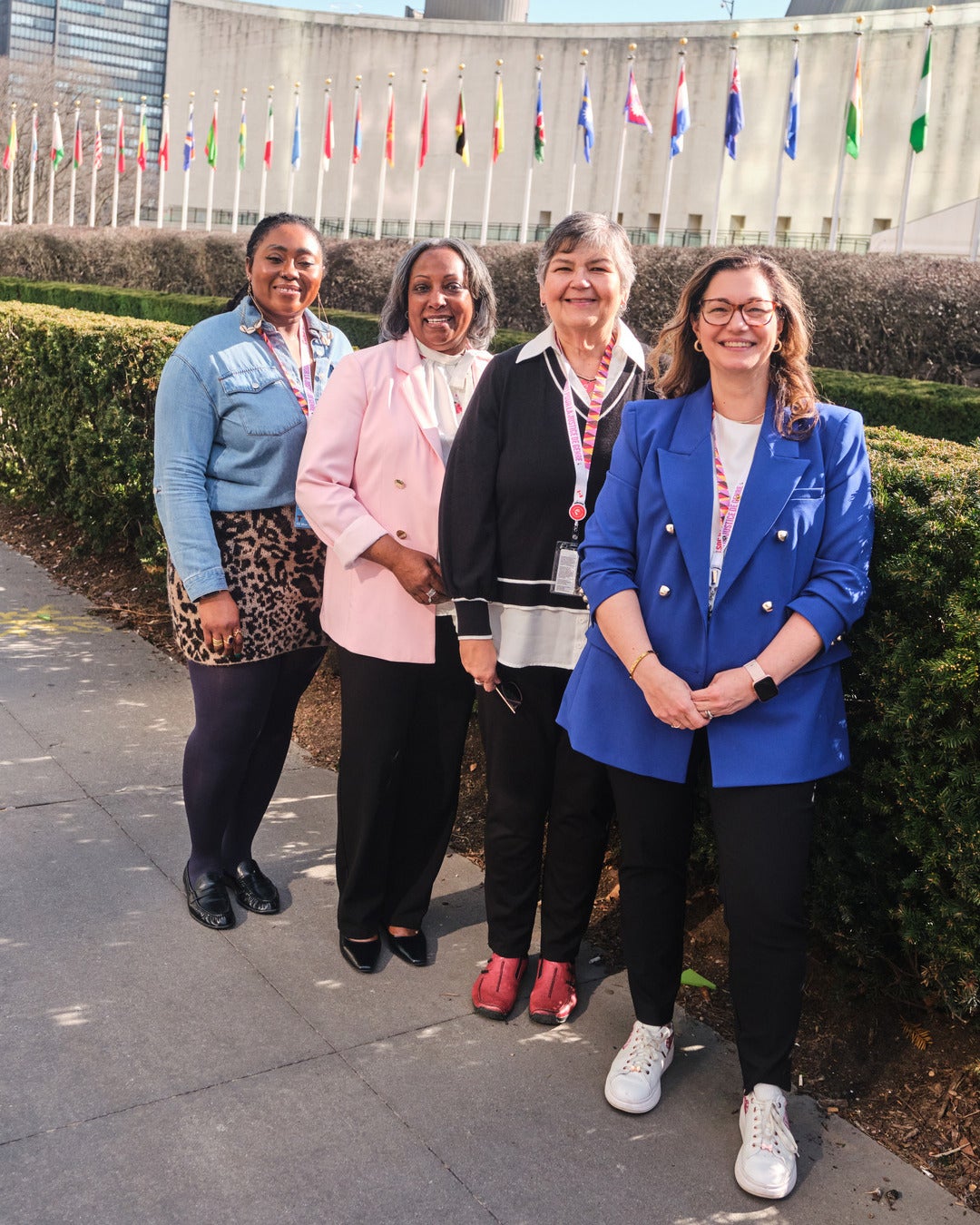
At the 70th session of the United Nations Commission on the Status of Women (UNCSW70) in March 2026, CUPE joined activists from around the world to push for women’s equality and gender rights. CUPE was part of a strong Canadian trade union delegation, working with global partners like Public Services International and the International Trade Union Confederation, as well as the Canadian government delegation and civil society organizations.
The session focused on access to justice for all women, girls and gender-diverse people. Discussions addressed discriminatory laws, gaps in legal systems and the barriers that keep women out of decision-making.
CUPE members and allies brought a union perspective to the conversation by linking access to justice with conditions at work. They raised the need for women and gender-diverse people to have a real voice through their unions and collective bargaining. They also called for stronger protections against violence, harassment and all forms of discrimination, as well as concrete action on equal pay and decent work.
We spoke with CUPE delegates about their experiences.
What stood out to you at UNCSW?
Dawn Bellerose, General Vice-President for Ontario, CUPE
My experience as a first-time delegate was incredible. Although there were lower participation rates this year due to safety concerns and increased restrictions while traveling to the US, every event that I attended was full to capacity and overflowed into the hallways. It was inspiring to hear about all the incredible work happening around the world and also to learn about ongoing struggles and barriers that many continue to face.
I was able to attend a few Indigenous events and hear the stories. It was great to see many women wearing their traditional clothing. The artisan fair was beautiful, with so many talented people selling handmade items representing their culture and home.
Natasha Stea, President, CUPE 4091 (Air Canada)
This was my first time being invited to the UNCSW. It was a privilege to witness how the global stage is structured to advance women’s rights. So many talented, compassionate and dedicated individuals work tirelessly to promote and protect human rights for women. I had the opportunity to meet these remarkable advocates who are championing our cause at the international level. It was especially meaningful to connect with women who have devoted years to advancing women’s rights.
Yolanda McClean, Regional Vice-President for Ontario, CUPE
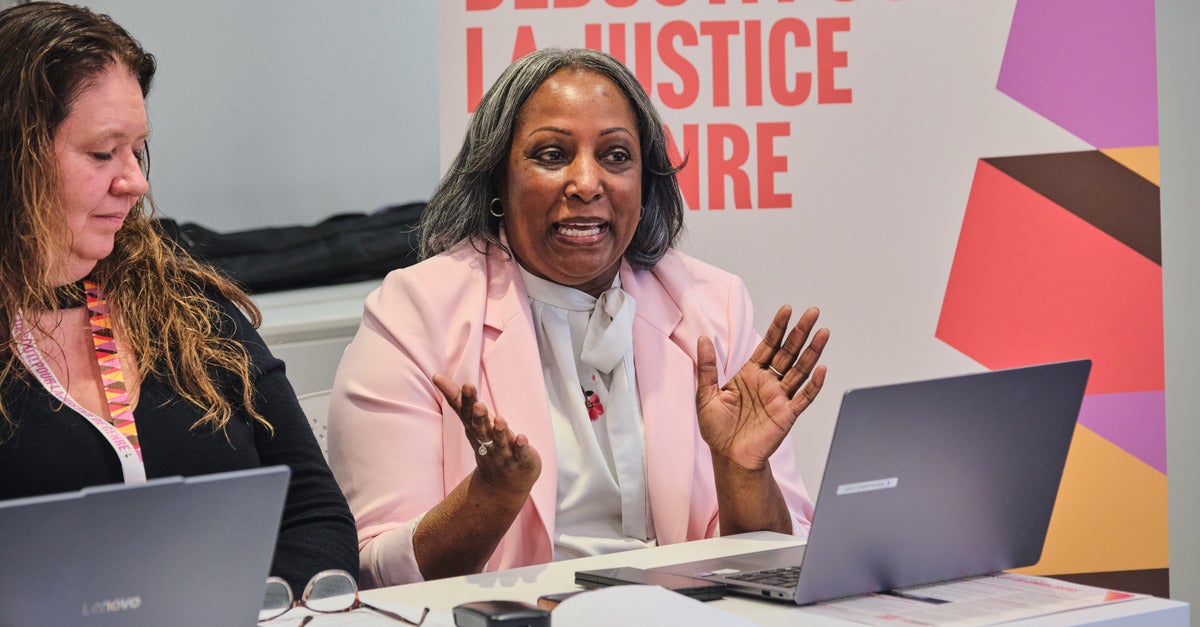
A defining moment was being recognized as a union leader in a global space shaping gender equality. I carried with me the voices of over 800,000 CUPE members, many of them women and front-line workers. It shows that labour is essential to advancing gender justice, and that workers’ realities— like gender pay gaps, barriers to accessible education for women and inequities in public services— need to be at the centre of these conversations.
Kimalee Phillip, Director, Human Rights Branch, CUPE
What stood out to me was the convergence of such a diverse range of organizations —feminist movements, human rights organizations, trade unions and government officials. This is crucial for the level of cross-movement organizing needed at this time as we witness global attacks on our collective rights and safety.
Why do unions need to be in spaces like UNCSW?
Dawn:
Unions need to be in spaces like this because of the strength we build when we come together. It was empowering to be surrounded by so many passionate, dedicated women fighting every day for justice for all women and girls.
Natasha:
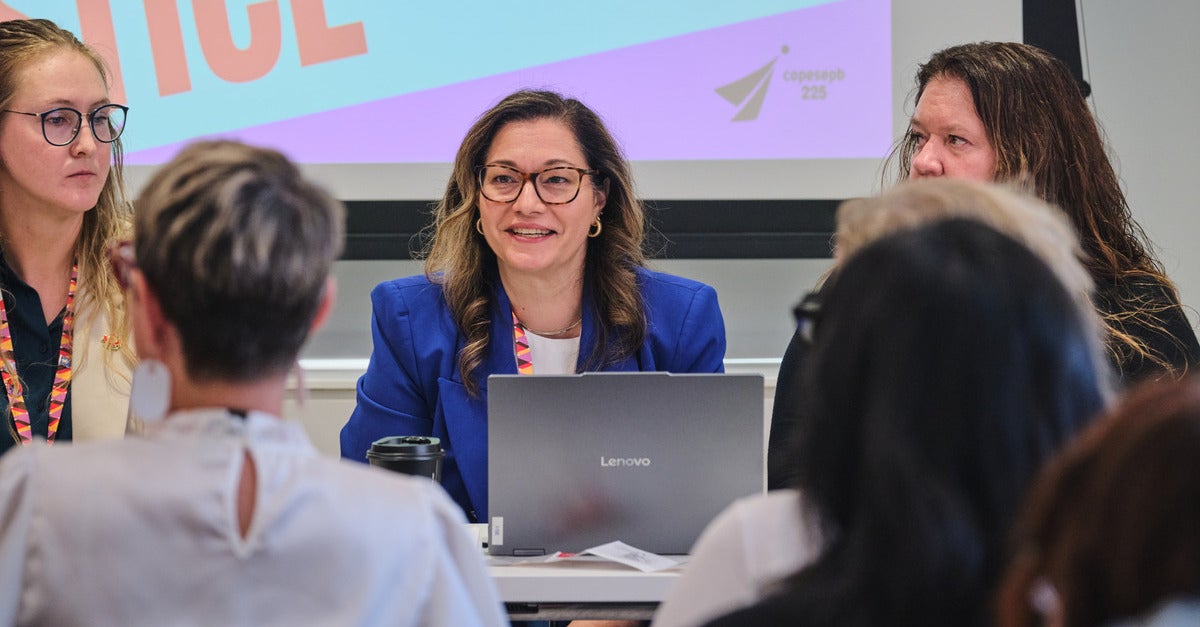
When we work together, we strengthen our ability to promote change, raise awareness and advance the conditions necessary to support every girl and woman. Unions embody this principle. They bring together individuals with a shared purpose, working collectively not only to improve their own conditions but also to contribute to broader social progress.
Yolanda:
This year’s focus on access to justice speaks directly to the inequities workers face every day — discrimination, gender pay gaps, unsafe workplaces, barriers to advancement and unequal access to education and training for women. Unions are critical in challenging these realities and securing real protections.
Advancing women’s participation and eliminating violence cannot happen without economic security, accessible education and safe, respectful workplaces. Labour doesn’t just advocate for change. We negotiate it, enforce it and make it real.
Dawn:
The delegation of women connected with the Canadian Labour Congress (CLC) was a big part of the experience. The CLC held daily debriefs each night. This was a great time to hear about all the different events everyone attended and to share highlights.
The CLC also held an event called Union Women: Rise up for Gender Justice. There was a panel of women who shared their stories around breaking down barriers. It was great to see CUPE’s own Yolanda McClean and Natasha Stea on this panel.
Yolanda:
As the president of the Coalition of Black Trade Unionists, I also had the opportunity to speak on a panel about women and the justice system. This was an opportunity to highlight how systemic barriers within legal and institutional frameworks continue to impact women, particularly those who are workers, racialized or from marginalized communities. Being present in that space meant ensuring those realities were considered in shaping international priorities and solutions.
Kimalee:
All of that work shapes the agreed conclusions, which are the official outcome of UNCSW. They set out what governments commit to do to advance women’s rights. That’s why union participation matters. Many of this year’s results were achieved through sustained efforts by labour activists.
For example, after many hours of advocacy, we blocked a proposal from the United States and other countries to define gender based on biological sex. The proposal reflected broader attacks on trans and gender rights around the world. Keeping that language out of the agreed conclusions was a significant step.
In the end, we secured and maintained language on a range of issues that are important to union members, including labour rights like decent work, collective bargaining and protections from violence and harassment. We also achieved recognition of multiple and intersecting forms of discrimination, which was an important and hard-fought win.
Natasha:
This fight is far from over. It’s deeply concerning to see that, despite the efforts of those who came before us, some of our gains are not only being challenged but reversed.
I came to a clear realization while in New York City: having a voice is having access to justice. Justice means having a voice, a choice and the opportunity to stand up. I was also struck by the reality that it often takes just one person to spark a movement, but it takes a collective effort to carry it through to meaningful change.
Yolanda:
UNCSW70 reinforced that global commitments have to translate into local action. As union leaders, we need to bring this work back to our members and communities.
Looking ahead
UNCSW is a critical space to advance and defend gender-based equity at the international level. Despite this, fewer people attended this year’s session than in the past.
The drop in participation reflects a broader erosion of democratic spaces globally, ongoing war and genocides and more securitized borders. Governments are restricting access to decision-making bodies and cutting support for civil society organizations, especially feminist and labour movements. As a result, it’s becoming harder to organize and influence decisions.
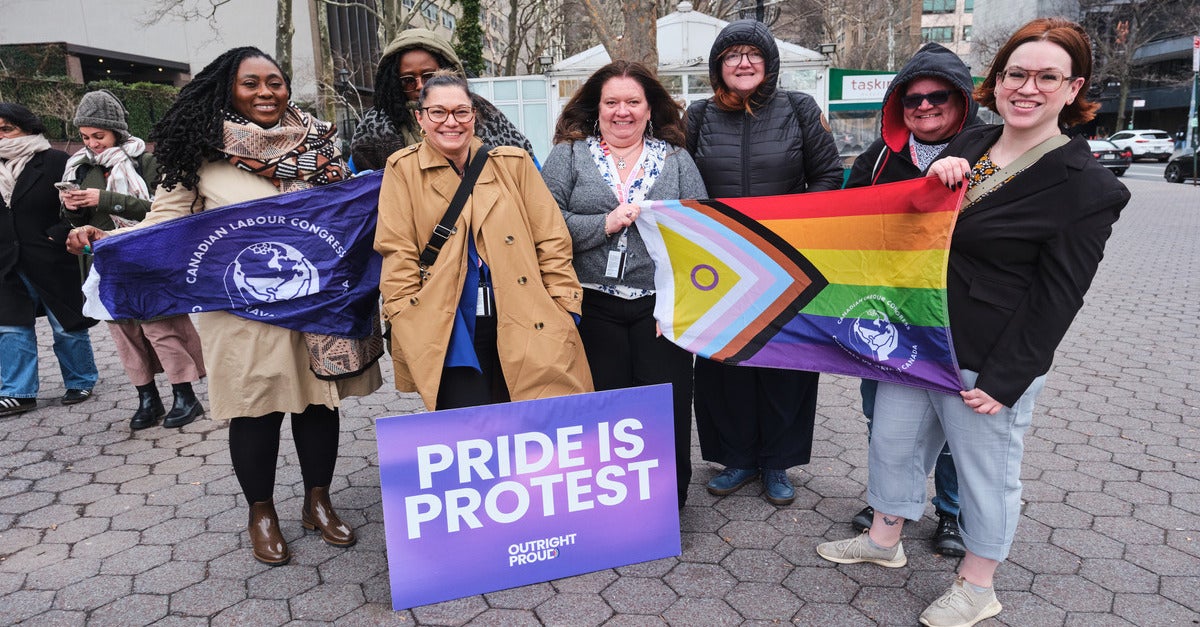
These pressures come alongside global attempts to roll back decades of feminist and trade union organizing. This includes a growing wave of anti-trans legislation. In the United States, a recent Supreme Court decision made it easier to challenge bans on conversion therapy. In Ghana, lawmakers are reviving a bill that would criminalize 2SLGBTQI+ people and their supporters. In India, a recently-passed law removed the right of trans people to self-identify. And here in Canada, Alberta’s conservative government just passed Bill 9, legislation that restricts access to gender-affirming care for youth. UNCSW delegates raised concerns about the limited attention paid to these issues at this year’s session and called for greater focus on the experiences of gender-diverse people, especially trans women, in future discussions.
CUPE’s membership is diverse, with over 60% identifying as women. Fighting for gender rights is at the heart of our work. In the face of ongoing attacks, our union remains committed to working with global partners, including at the United Nations, to push back against exclusion and defend the rights of women and gender-diverse people in Canada and beyond.


