

At the last United Nations Climate Change Conference (COP30) in Brazil, CUPE 403 member Konrad Beston described how climate change is reshaping his work as a stormwater worker for the Township of Langley, B.C.
“My job involves replacing infrastructure that is undersized and cannot handle the current conditions of climate change,” he said. “We’re overwhelmed. We need more workers to come in – and workers need to have a say in how the infrastructure is built.”
The impact of climate change on workers and vulnerable communities, and our aspiration for a just and equitable transition to a sustainable planet, are what brought the global labour movement, Indigenous communities, feminist and climate justice organizations to the COP30 in November 2025. CUPE attended with a delegation led by the Canadian Labour Congress (CLC).
Communities across Canada and around the world are experiencing more droughts and floods. Forest fires are increasing in number and ferocity. Countries affected by hurricanes and typhoons are seeing them more often and reporting them to be much stronger and more destructive than in the past. Some island nations fear they will soon disappear entirely.
Climate change has also become a major driver of migration, as people are forced to leave their homes in search of work and safety in other countries.
The gap between promises and reality
Brazil hosted the summit in Belém, in the state of Pará – a city living the contradictions of climate politics up close. The annual UN climate talks are supposed to bring together government representatives from around the world to discuss and negotiate concrete solutions to the climate crisis. But the COP30 outcomes fell far short of what is needed to prevent further warming, adapt to the current climate reality, and support communities as they recover from the loss and damage caused by climate disasters. There was also no clarity on funding this essential work.
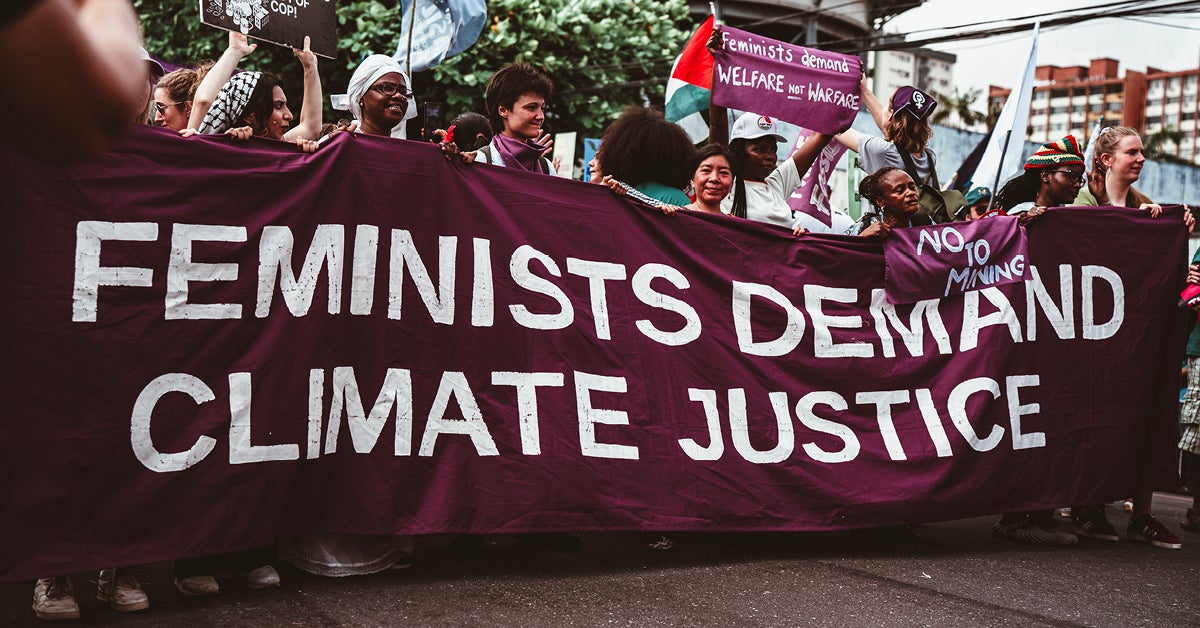
We know women, especially Indigenous women and those in the Global South, are hardest hit by climate disasters, climate displacement, and climate-driven migration. Women face multiple forms of discrimination, are often primary caregivers for children, and often struggle to access the health and social services needed when a climate emergency hits, particularly in rural communities. Food and income insecurity leave women more vulnerable to gender-based violence and lead to forced migration in search of work.
But we will all suffer if we do not reverse the damage that has been done. Ensuring that the voices of the most affected communities are heard has always been crucial, and often a struggle – this COP was no different. The Government of Brazil was criticized after reports that only 14% (about 360) of the roughly 2,500 Indigenous Brazilian representatives expected to attend were granted access to the official negotiations. In total, the official United Nations negotiation space (the Blue Zone) included 42,582 participants from delegations representing 195 countries.
The Heart of the Amazon
Belém sits at the mouth of the Amazon, in a region known as the Heart of the Amazon Reserve. The Amazon is home to hundreds of Indigenous communities, and the region holds an estimated 10% of all known plant and animal species on Earth. The significance of the location was not lost on anyone. The Amazon rainforest is sustaining life on the planet by storing carbon and releasing water, stabilizing global temperatures and water cycles.
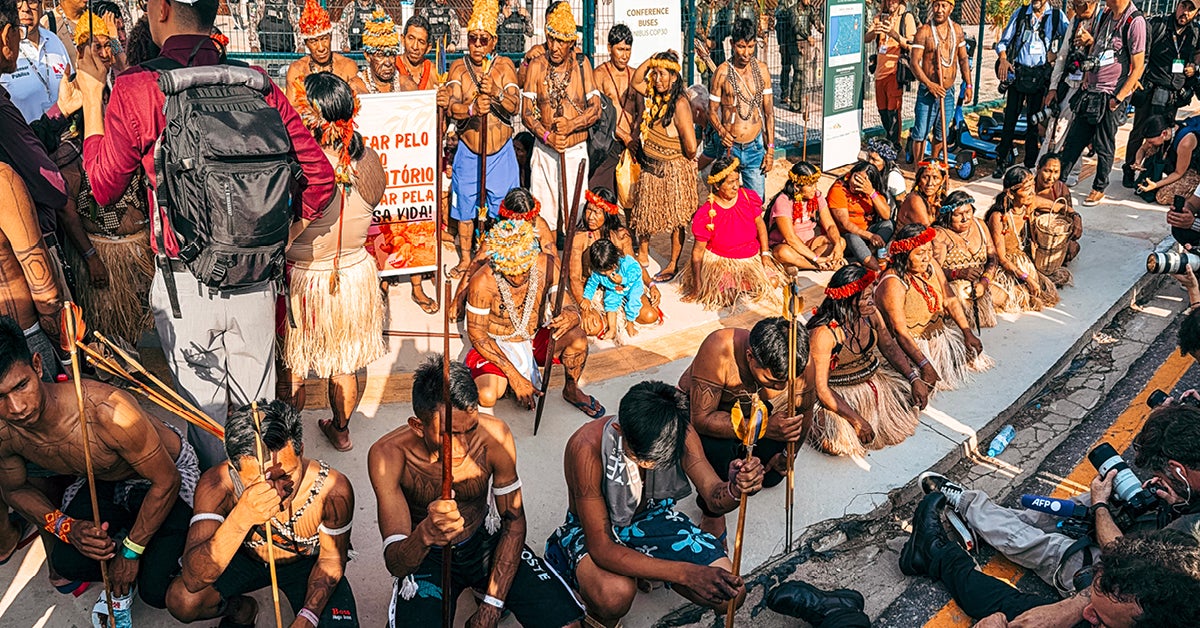
Through the lens of profit, the Amazon rainforest is a target for illegal logging, cattle ranching, and mineral extraction by large corporations. The need to protect it from deforestation and fires is urgent, and we cannot address climate change without protecting the Amazon. Indigenous peoples, drawing on thousands of years of knowledge and stewardship, raised their voices inside and outside the COP to defend these lands as they face escalating threats.
Toward a just and equitable solution
Addressing our overreliance on fossil fuels like coal, oil and natural gas is often identified as the path forward. This is what governments agreed to in Paris in 2015, when they committed to reduce greenhouse gas (GHG) emissions so the global temperature does not rise more than 1.5°C above pre-industrial levels.
The global labour movement has long called for a just transition, initially focused on transitioning predominantly male workers in fossil fuel industries to other jobs, including in renewable energy manufacturing and generation. Over time, a broader understanding of a just transition has emerged: one that also challenges the gendered division of labour and recognizes the value of women’s work and feminized sectors, such as care.
Health care and social care work are low-carbon. While a just transition is often associated with shifting high-carbon sectors like energy or transportation toward low-carbon alternatives, it also includes creating climate-friendly care jobs, including public investment and expansion in health and social care work, and strengthening universal access to quality public services. Demand for care workers continues to grow and these jobs can be critical to climate mitigation and adaptation.
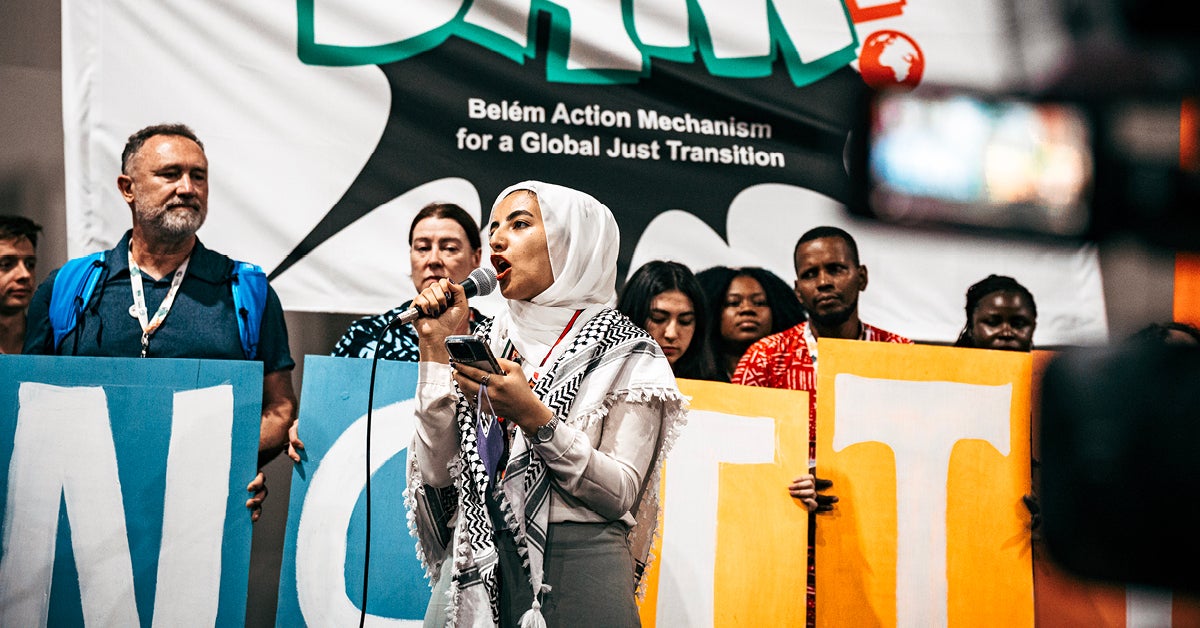
The call for a just transition has strong and broad support. It has evolved into a multi-sector demand from environmental and climate justice groups, women’s and gender rights organizations, youth, and Indigenous peoples, for the Belém Action Mechanism for a Global Just Transition, or BAM as it was called at COP30. The labour movement created BAM to recognize that workers’ participation, labour rights, social protection, and decent work are essential for ambitious and fair climate action.
CUPE and many others are clear that a just transition must tackle the root causes of the climate crisis. That means a public-led energy transition focused on public ownership, democratic control, and an end to the current “energy for profit” model.
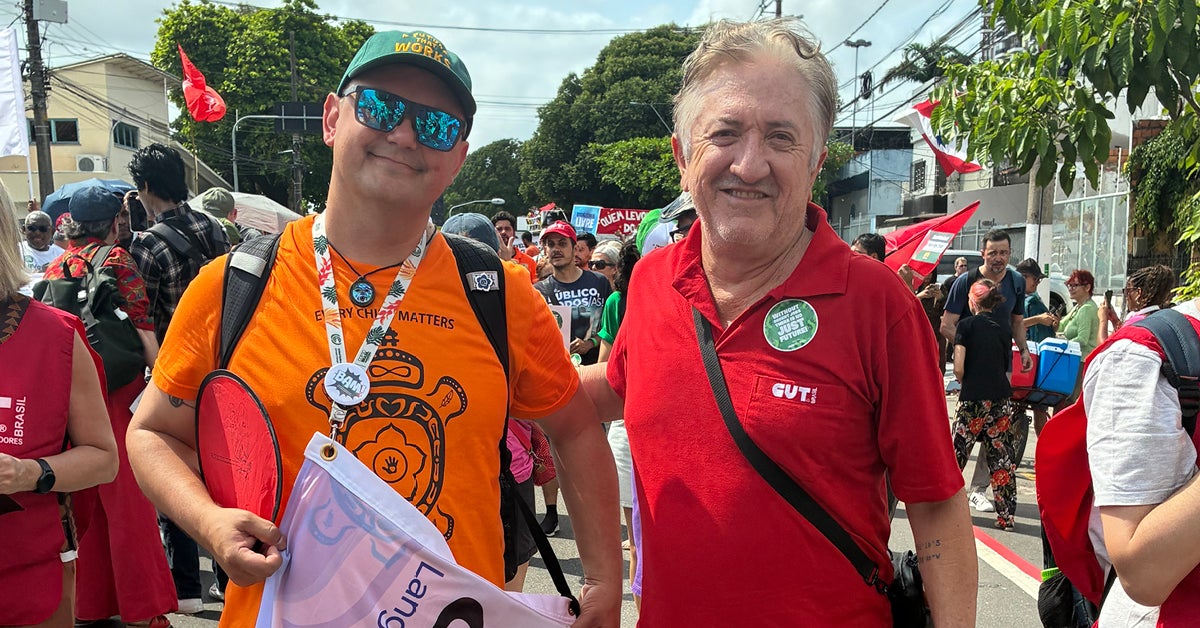
Konrad Beston is also a member of the CUPE BC Indigenous Committee and a former member of CUPE’s National Indigenous Council. “Close to my heart are the Seven Generations teachings,” he says – a reminder that our union’s fight for a just and equitable response to the climate crisis is about what we leave behind. The choices we make today to protect workers, strengthen public services and safeguard vital ecosystems, including the Amazon, will shape our communities for generations to come.