


 Inflation in Canada may be calming compared to the record highs in 2022 and 2023, but people are still struggling with the cost of living. While overall inflation increased by 2.1% on a year-over-year basis in September 2025, housing and grocery prices are rising at a significantly higher rate, the national averages being 4% for groceries and 4.8% for rent.
A recent national survey conducted by Nanos Research revealed that one in five people have skipped a bill payment in order to afford groceries over the past year. Younger people were four times more likely to have been in this situation than their older counterparts — 18% of people aged 18 to 34 versus 4% of people 55 and up.
In the October 2025 Labour Force Survey, Statistics Canada reported that over one in four people in Canada (27.7%) live in a household facing financial difficulties – meaning they were struggling to afford basic necessities like transportation, food, and clothing. While 27.7% is still far too high, this number has been on a downward trend since reaching a record high of 35.5% in 2022. Individuals who rent their homes were more likely to experience financial difficulties (37%) than those who live in a home they or somebody else in their household own (23.6%). Both of these numbers are trending downwards only slightly, while food and shelter costs continue to rise.
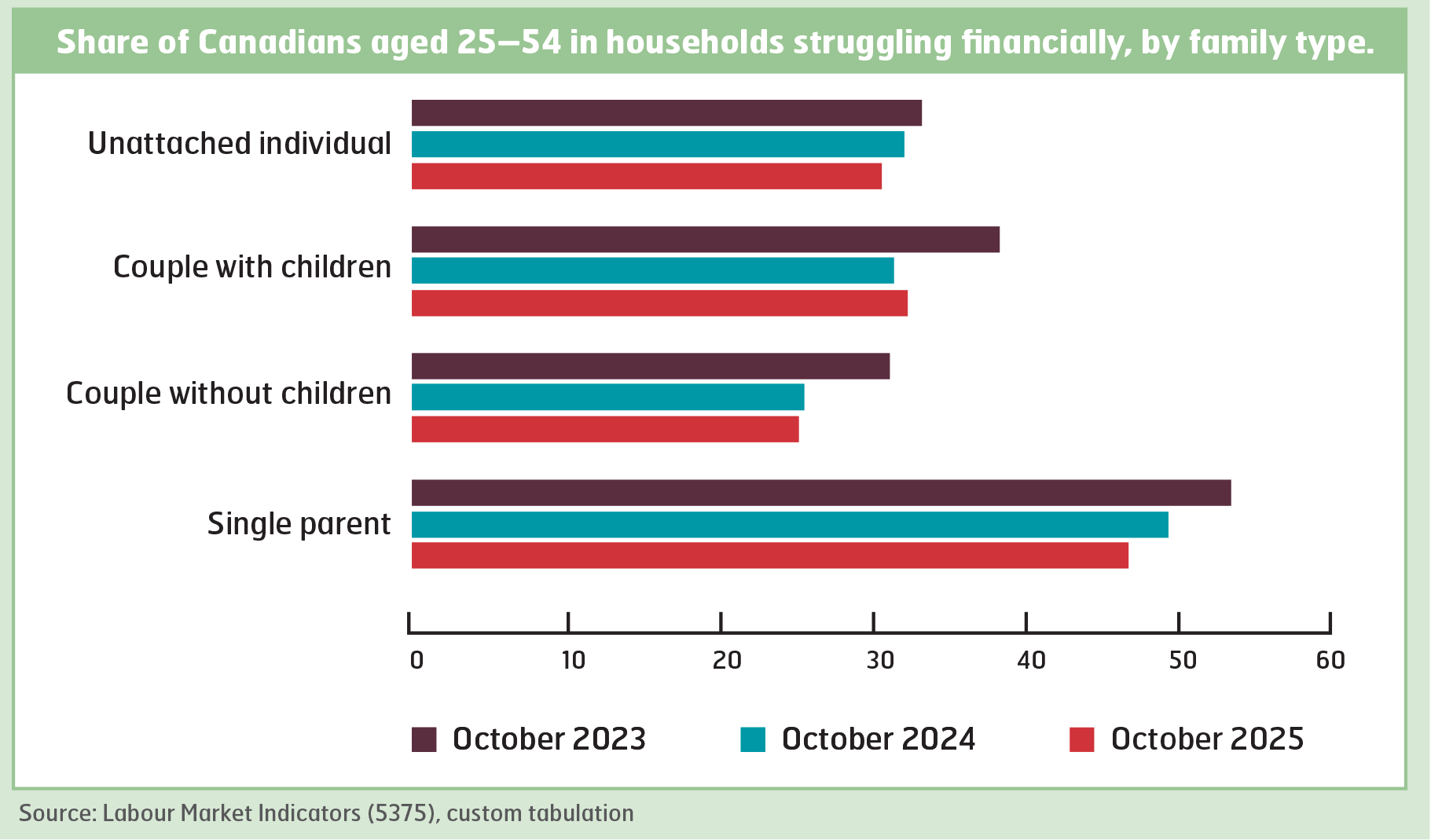
Perhaps unsurprisingly, who’s in the household and whether they have a job have a big impact on the risk of financial hardship. Researchers at Statistics Canada found that more couples with children faced financial difficulties in October (32.4%) than couples without children (25.3%). This number is higher for single parents: 46.8% reported financial difficulties. Similarly, people living in a household with at least one unemployed person were much more likely to report challenges meeting their financial needs (46.1%) than those living in households with no unemployed people (25.8%).
Even if these numbers are trending downwards, they highlight the fact that far too many people in Canada are still struggling to make ends meet. We urgently need government action that will meaningfully address this economic insecurity. The government’s 2025 budget misses the mark with respect to what people in Canada really need. Instead of focusing on big business and tax breaks, the Liberals should be expanding programs like pharmacare, dental care and $10-a-day child care.