

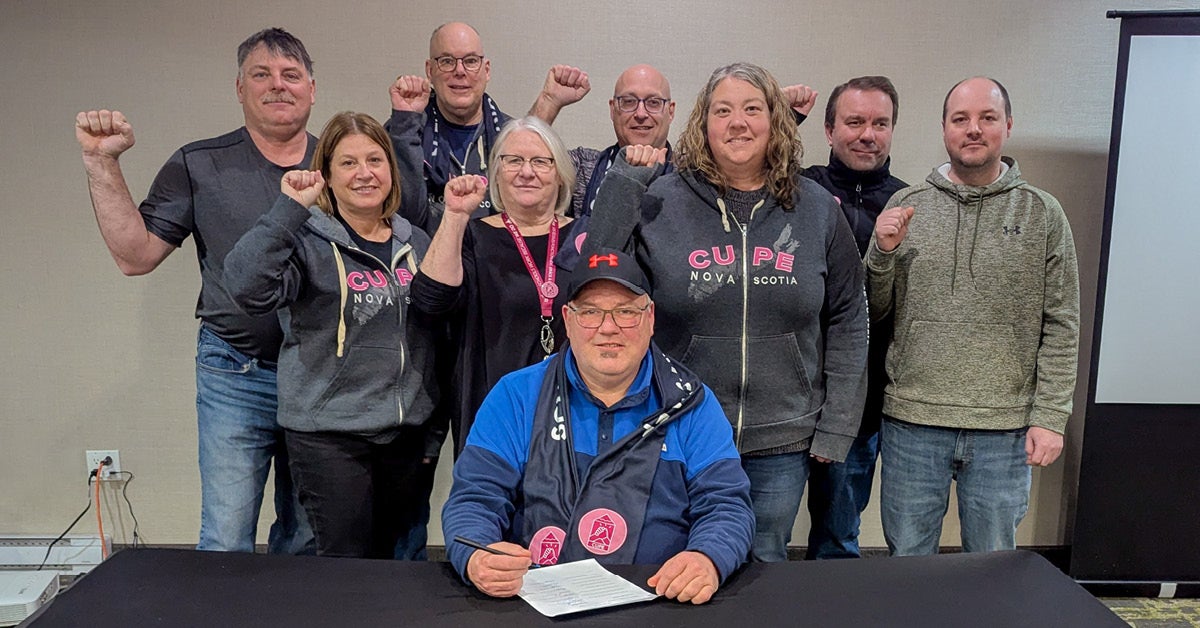
“We knew we had to do something,” Nelson Scott says. Chair of the Nova Scotia School Board Council of Unions and President of CUPE 5050, Nelson knows school support workers in Nova Scotia have been facing violence on the job for years. With incident rates on the rise, “Our members were crying out for help. Employers weren’t taking their reports of violence seriously.”
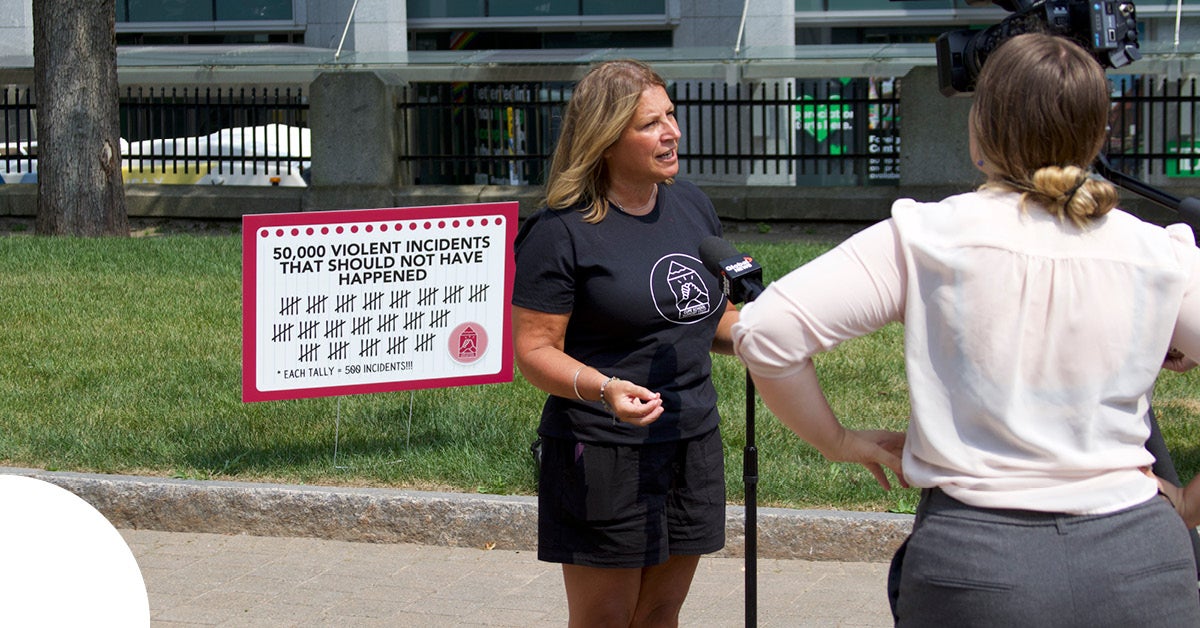
The school board council of unions represents more than 5,500 CUPE workers in public schools in Nova Scotia spread across eight CUPE locals. These workers include teaching assistants, custodians, bus drivers, early childhood educators, librarians, secretaries, community outreach workers, accounting clerks, computer technicians, cafeteria workers, mechanics and many more roles essential to our schools. In a six-month period between 2023 and 2024, 600 violent incidents were reported to a single employer — and 70% of the reports came from CUPE members.
“We had been bringing the violence issue to the bargaining table for many years with suggestions and solutions, but the employer kept dismissing us out of hand, saying we didn’t have the data to prove it. They didn’t believe the problem was as big as we were telling them it was,” Nelson says.
From personal struggle to bargaining issue
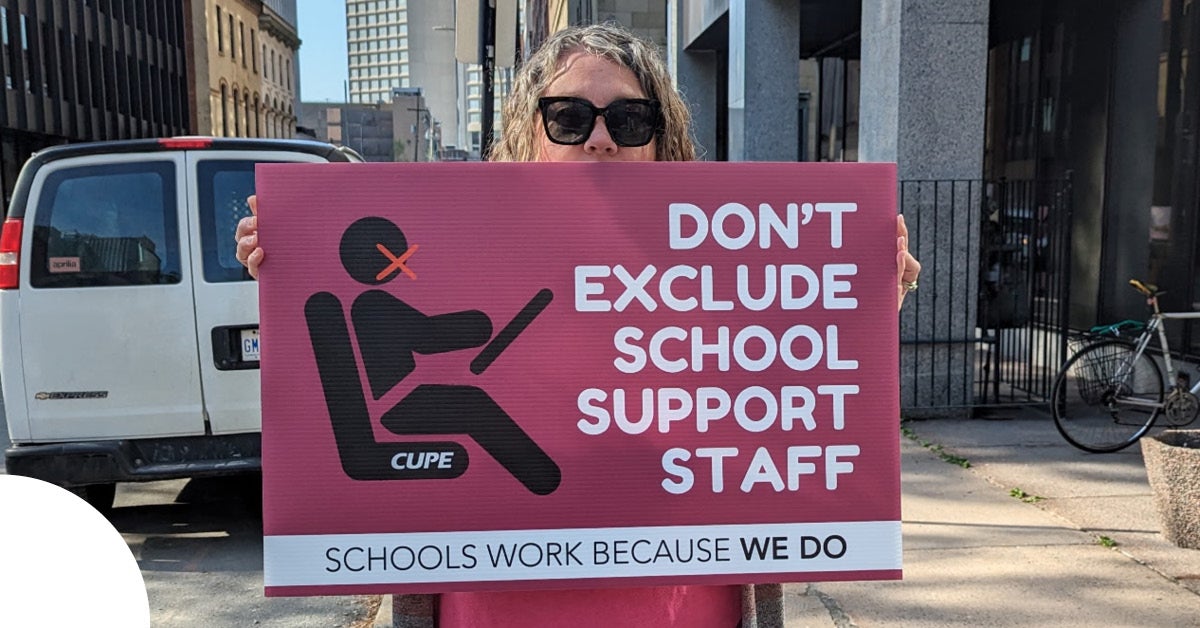
The council refused to accept the employers’ failure to take them seriously and launched a province-wide survey to capture the quantitative data to back up what they already knew members were facing.
“When we got the numbers back, which were staggering, we knew this was a bargaining priority,” Nelson says. Through the survey, 65% of school support staff reported that they witnessed or experienced violence in schools on a weekly basis, and 31% said they experienced violence daily.
In June 2024, the Nova Scotia Auditor General released an audit on violence in schools that echoed many of the members’ concerns. In response to the report, the Minister of Education committed to several actions to address violence, including updating the School Code of Conduct. But CUPE locals were not consulted on the approach, and members felt that it missed the mark.
Telling the story in our own words
“We knew the violence situation wouldn’t get better if members were not included in shaping the solution,” Nelson says. “We needed to counter the government’s claim that this issue was being dealt with adequately, so we created a public-facing campaign that aligned with our bargaining priorities.”
In August 2024, NSSBCU launched Safe Staff, Safe Schools, a campaign backed by a worker-led review of violence in Nova Scotia’s public schools. The review used testimonials and data from the violence survey, combined with information from the Auditor General’s report to support five recommendations that put the needs of school support workers at the centre of the violence issue.
Shaping demands to solve the problem
While increasing staffing levels was a critical piece of the puzzle, conversations with members revealed they also wanted more comprehensive training to deal with the violent incidents they were confronting on the job. For example, non-violent crisis intervention training was only being provided to members the employer deemed at highest risk of violence.
The survey also showed the bargaining committee that members lacked access to the electronic reporting system used by teachers. Instead of reporting violent incidents themselves, members had to go through supervisors, who didn’t always understand the severity of members’ experiences.
The despair was palpable. In the words of one survey respondent: “Nothing is ever being done to help us. Reports are filled out, but nothing has changed. We are told violence is part of our jobs, but it is not, and we do not get paid very much, especially to account for that.”
“Removing barriers to reporting was a key bargaining proposal,” says Mary Fougère, Nova Scotia School Boards sector coordinator and CUPE national representative. “Without the ability to submit their reports directly, violent incidents that our members were experiencing on the job were getting missed, and the data being collected and analyzed by the Department of Education and Early Childhood Development wasn’t telling the full story.”
Protecting our gains, expanding our ambitions
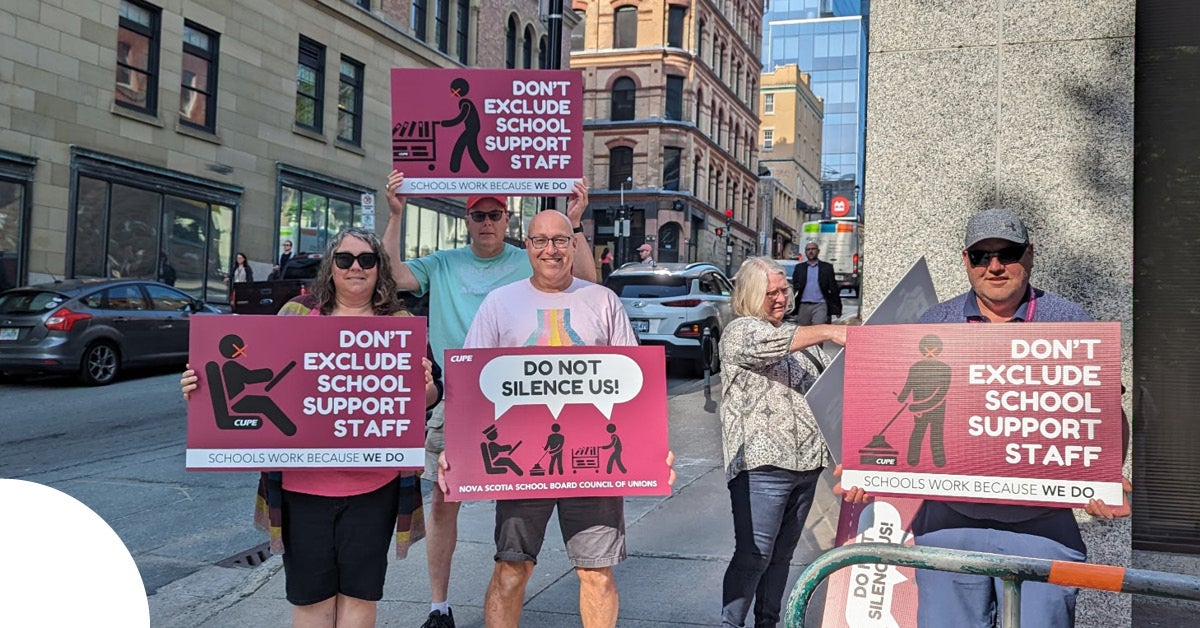
Successful contract negotiations resulted in a wage increase of 9-16% over two years for all school support staff. Violence training was expanded to include all CUPE workers, and language securing an electronic incident reporting process, and training on how to use it, was also added.
“Now that the locals have language on these issues, they can enforce it. They can file a grievance, they can go to arbitration to fight for what’s right, they can establish precedent on these issues,” says Jenna Brookfield, CUPE national occupational health and safety representative. “Fighting for and winning new protections is hugely empowering – it’s how we move everyone forward and create a culture of safety in our workplaces.”
The fight for safe schools is far from over, though. “Enforcing the language we’ve won is exactly how we find out what still needs improvement,” Nelson says. In their current round of bargaining, Nova Scotia education workers will be fighting to ensure that training provided to staff is high-quality, in-person education. They are asking for data to be disaggregated to investigate whether any groups of workers are being disproportionately impacted by violence in the workplace. And, among other measures, they are seeking a guarantee that all support staff will be replaced when they are absent as a matter of policy.
“This struggle has shown us that this government’s promises can’t be trusted unless they’re in the language of our contract,” ScottNelson concludes. “We received a written letter from Education Minister Brendan Maguire during the last round stating that our locals would be included in any future discussions about addressing violence in schools. We thought that was a show of good faith, and accepted it. But once the tentative agreement was ratified, the minister abolished the committee we were invited to. Just goes to show that if we want something guaranteed, it must be in the text of the agreement.”


