
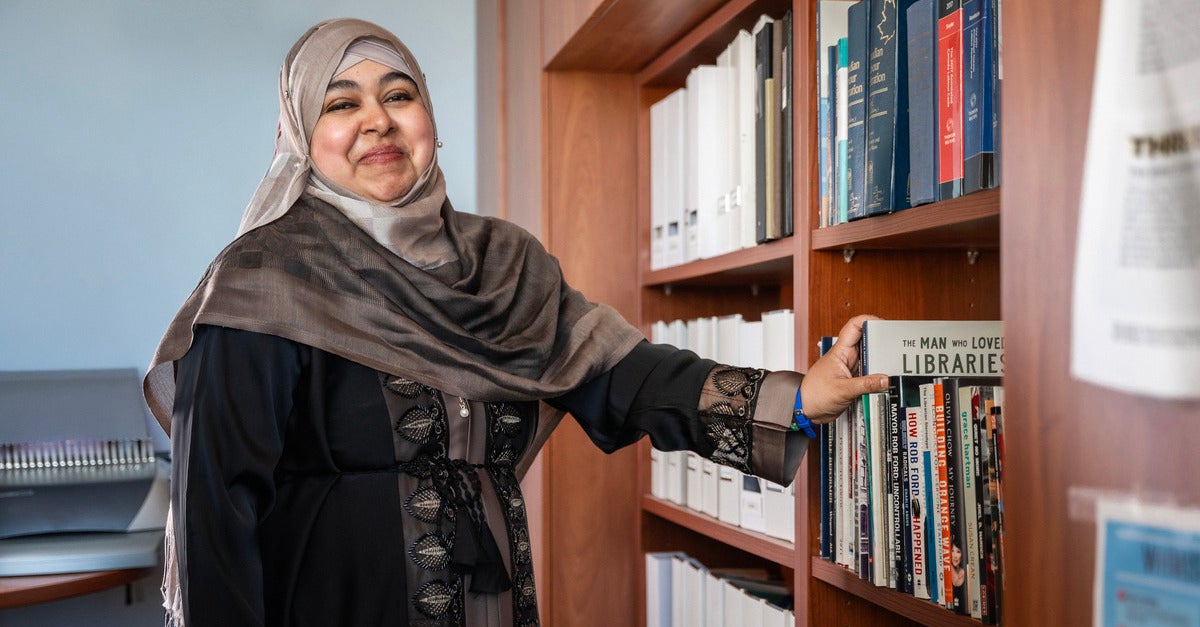
In recognition of Canadian Library Month and CUPE’s Year of Health and Safety, we’re shining a spotlight on CUPE 4948 member Samiya Syeda. Samiya has been a library worker at the Toronto Public Library for 23 years. A long-time member of the joint health and safety committee, Samiya also serves as her local’s health and safety officer. Her priorities include addressing workplace violence, responding to the overdose crisis and ensuring library workers have the support and resources they need to stay safe on the job.
1. What got you interested in being a health and safety officer?
I have a background in science. Joining health and safety allowed me to put my knowledge to use. My favourite thing about the job is helping others and sharing how to be proactive about your rights and responsibilities.
2. What are some misconceptions about library workers?
One misconception is that we do not face violence and harassment. The general public does not see what we face to deliver work in a safe manner. Another is funding. We are not funded in the same way as other city services, even though libraries provide the highest amount of free services to the public. We are researchers, teachers, advocates, and more, yet people are not aware of the service we provide.
3. What are the biggest health and safety concerns at your workplace?
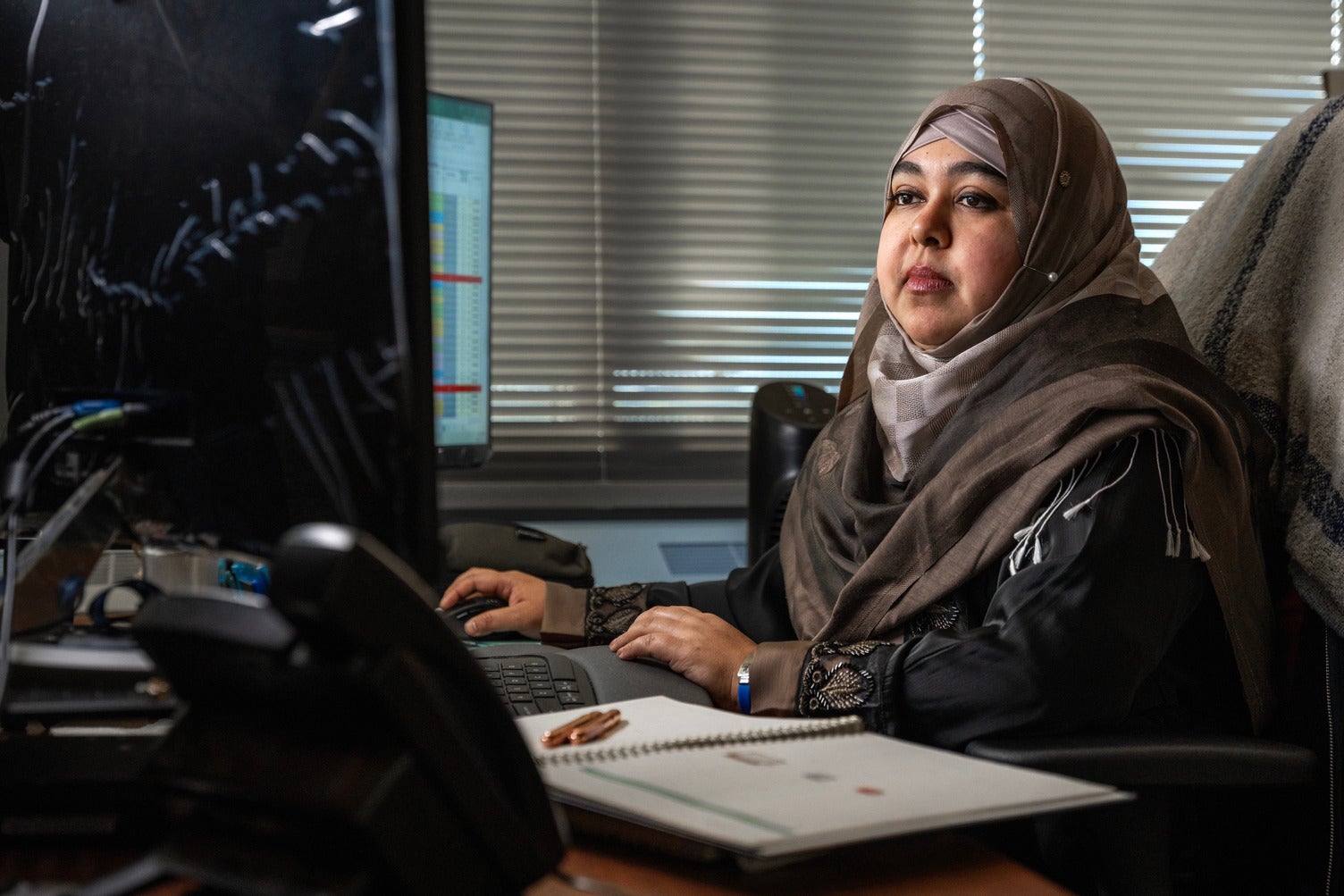
The two most important issues facing our organization today are workplace violence and the overdose crisis. Libraries are a safe place for all, but issues such as homelessness, mental health challenges, housing insecurity and gaps in social services often present themselves in library environments. Some parents fear bringing their children to the library because of violence, especially in high-needs locations. These issues are affecting and demoralizing staff. While attending CUPE conferences and connecting with reps in other locals, I noticed that, sector-wide, libraries were dealing with similar concerns.
4. What has your local done to address these issues?
Even though these issues are still prevalent, we’ve been able to put supports and education in place to tackle them.
For the overdose crisis, not only were we dealing with a lack of support for our members, but we were also battling misinformation and stigma. I identified that there were significant gaps in training our members received. Many members lacked the knowledge to recognize overdose signs and respond appropriately due to outdated protocols. Then the provincial government closed safe injection sites and suddenly libraries were on the frontline of the crisis. The library’s standard of response was not enough, so I contacted every community health centre that offers training and response to overdoses to see how they were responding. This led me to Ray Clark, a health promoter with Parkdale Queen West Community Health Centre and HART Hub. He worked with us on an overdose working group convened by the employer to review our protocols and to develop custom training for our members. We now have support and education on how to assist individuals with empathic responses until professional services arrive to take over.
While there was initial hesitation, understandably, it became clear that we couldn’t ignore the crisis. It was at our doorstep and we had to respond. Libraries cannot replace health and social services, but as trusted community spaces, we are often on the front lines of these challenges. Our role is to provide compassionate, immediate support within our capacity.
For violence in the workplace, we pushed for a response program. We now have a step-by-step response when a violent incident occurs, a customer alert announcement to identify serial trespassers with response instructions and post-violent incident leave for affected staff. We achieved these things through a discussion table with our employer and through bargaining.
5. Can you share how collaboration between your joint health and safety committee and bargaining team has led to meaningful changes for members?

We’re really collaborative at our local. Our bargaining team was open to the joint health and safety committee’s feedback and recommendations, and they gave us a lot of leeway to implement changes. In bargaining, we fought to keep the language that defines violence, that is more specific and stronger than the Ontario Health and Safety Act definition. We also pushed for a letter of agreement on psychological safety and well-being in the workplace. Sometimes the joint health and safety committee makes small wins without a grievance or bargaining. But overall, it is important to have the language available in the collective for long-term protection of the workers. Our goals are aligned - we want a safe and enriching workplace for our members.
6. How can library workers be better supported?
As library workers represent a small percentage nationally and provincially, our voices are often overlooked. Public perceptions of libraries are frequently shaped by what people see on movies and television, rarely reflecting the full scope of our work and complex challenges. To improve this, decision makers need to hear from library workers about their experiences, working environments, and the growing demands placed on them. It is equally important to recognize that libraries rely on many levels of workers with unique responsibilities. Every level of staff deserves to be heard and represented in these conversations. I believe that sharing library workers’ stories is essential to building greater public understanding and recognition of the profession.