
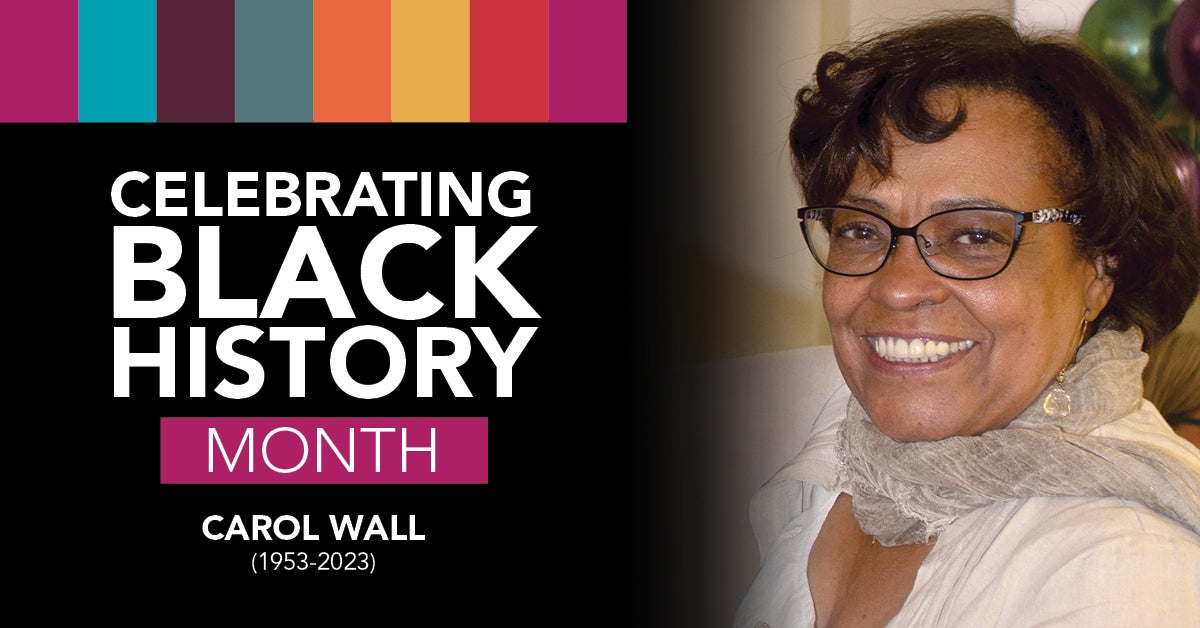
Carol Wall was a fearless Black feminist, trade unionist and anti-racist activist. Her leadership transformed the Canadian labour movement and had a profound impact on our union.
From her early days at the Toronto Star, where she spent years organizing and advocating through the Southern Ontario Newspaper Guild, to her national roles in later years, Carol’s commitment to equality and workers’ rights never wavered.
Breaking ground on pay equity
Carol was a founding member of the Coalition of Black Trade Unionists and one of the first Black women activists in Ontario to challenge race-based wage discrimination.
Carol insisted we could expose racism in pay structures simply by looking at the people doing the lowest-paid jobs in our workplaces, often Black and racialized workers.
She worked with CUPE and the Ontario Federation of Labour to challenge job evaluation systems. At the time, these systems undervalued work typically done by racialized women and painted the low pay as “market realities,” masking institutional racism. Her decades of advocacy led to race-based discrimination being recognized in a landmark 2004 federal pay equity report.
Leaving her mark on CUPE
Carol had a profound impact on our union. She helped develop CUPE Ontario’s Anti-Racism Organizational Action Plan to break down barriers and create a stronger, more inclusive union.
A seasoned labour educator, Carol was also deeply involved in launching Women in Leadership Development (WILD). This radical program supports Indigenous, Black, and racialized CUPE women to be, as Carol put it, “the creative and courageous leaders the movement needs.”
Inspiring the next generation
As the Communications, Energy and Paperworkers Union’s first human rights director, she worked to unite equity-deserving members and strengthen human rights across the labour movement.
Her leadership continued at the Canadian Labour Congress, where she worked on women’s rights and was a member of the CLC’s human rights committee. In 2002 she was elected to the CLC executive council as a vice president representing workers of colour.
Carol’s historic 2005 campaign for CLC president inspired a new generation of activists demanding a bold, inclusive, and militant labour movement.
Carol later worked as a negotiator with the Public Service Alliance of Canada before joining the Federal Mediation and Conciliation Service, where she became the first Black woman to serve as Ontario director.
Sadly, Carol left this world in April 2023. She is survived by her three children, her husband and her grandchildren, all of whom loved her dearly. Carol’s legacy lives on in our ongoing fights for justice.


